

Why is everyone talking about solar power plants?
In recent years, solar energy has become one of the fastest-growing energy sources in Croatia. The reasons are clear: more and more households want to reduce their electricity bills, increase energy independence, and invest in technology that is eco-friendly and profitable in the long run. But before deciding to install a personal photovoltaic power plant, it is important to understand the basic principles – what is a solar power plant and how does it actually work?
What is a solar power plant (PV plant)?
A solar or photovoltaic (PV) power plant is a system that converts solar energy into electricity using solar panels. It is most commonly installed on the roof of a house, an auxiliary facility, or on the ground, and it can cover a portion or even the entirety of a household's annual electricity consumption.
The main functions of a PV plant are:
- electricity generation from a renewable source
- reduction of consumption from the electrical grid
- lower monthly bills
- increased energy independence
How do solar panels produce electricity?
Solar panels contain photovoltaic cells, most commonly made of silicon. When sunlight hits them, a physical process called the photoelectric effect occurs.
To put it simply:
- Sunlight hits the cell.
- A photon "pushes" electrons inside the silicon.
- The electrons begin to flow – generating direct current (DC).
- This current is sent to the inverter.
Panels also work when it is cloudy – just with lower efficiency, as diffuse light also triggers the process.
The role of the inverter – the heart of every power plant
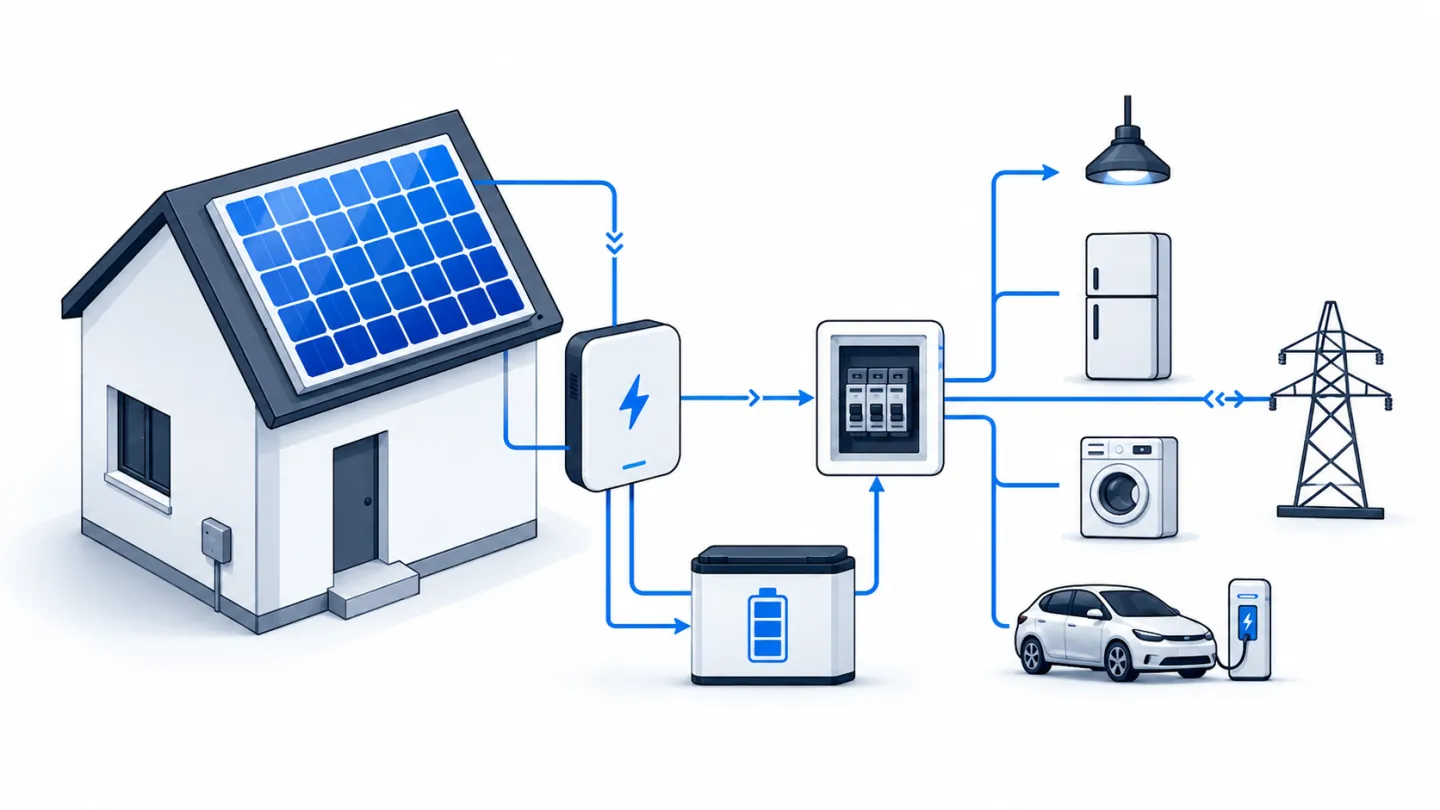
The electricity from the panels is not immediately ready for household appliances. That is why an inverter is used – a device that converts direct current (DC) into alternating current (AC), which is compatible with your wall outlets and the grid.
The inverter also:
- optimizes the power plant's operation
- monitors production
- communicates via an app
- protects the system from overloading
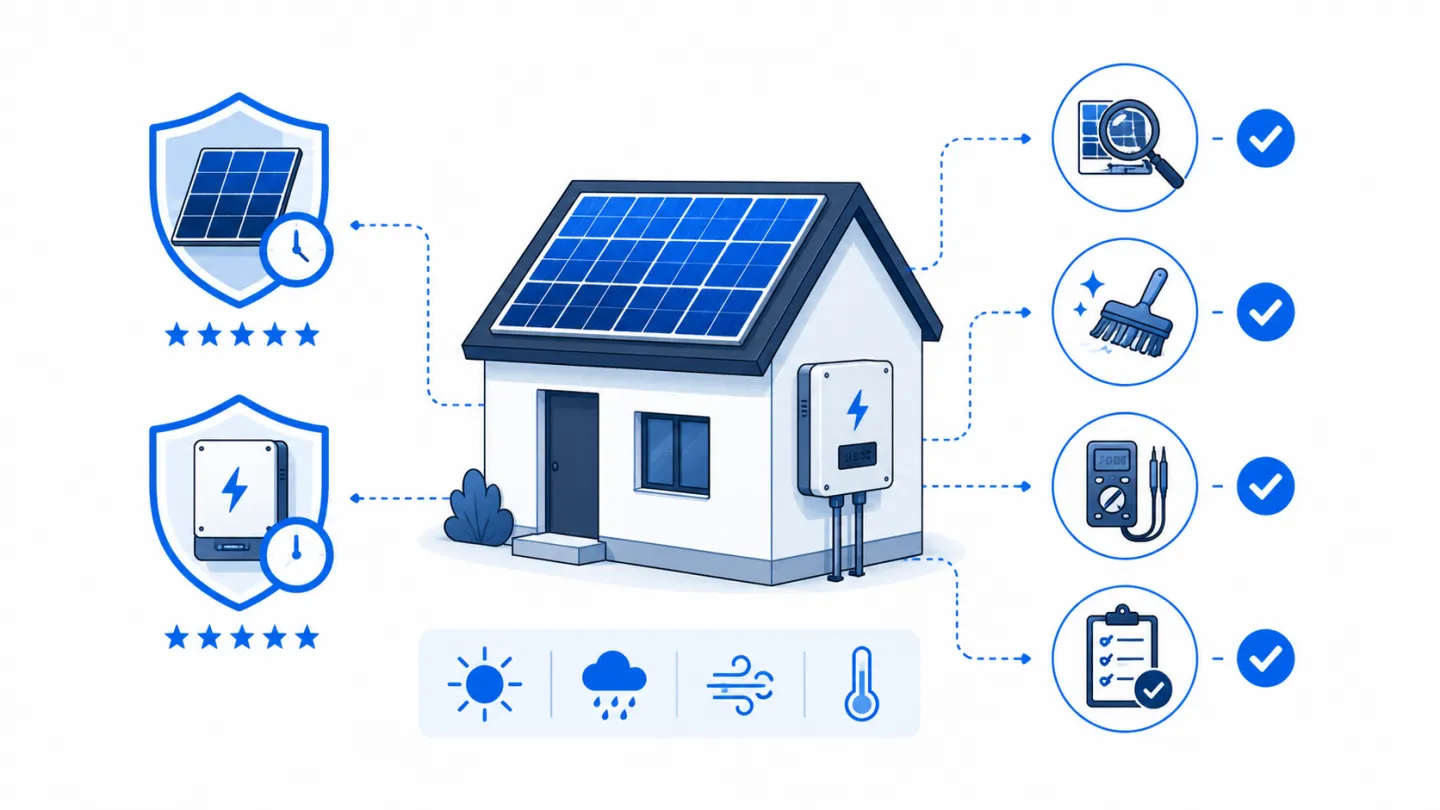
Due to its intensive operation, the inverter has a slightly shorter lifespan than the panels – averaging 10–15 years.
Other important components of a solar power plant
A complete PV plant typically includes:
1. Solar panels
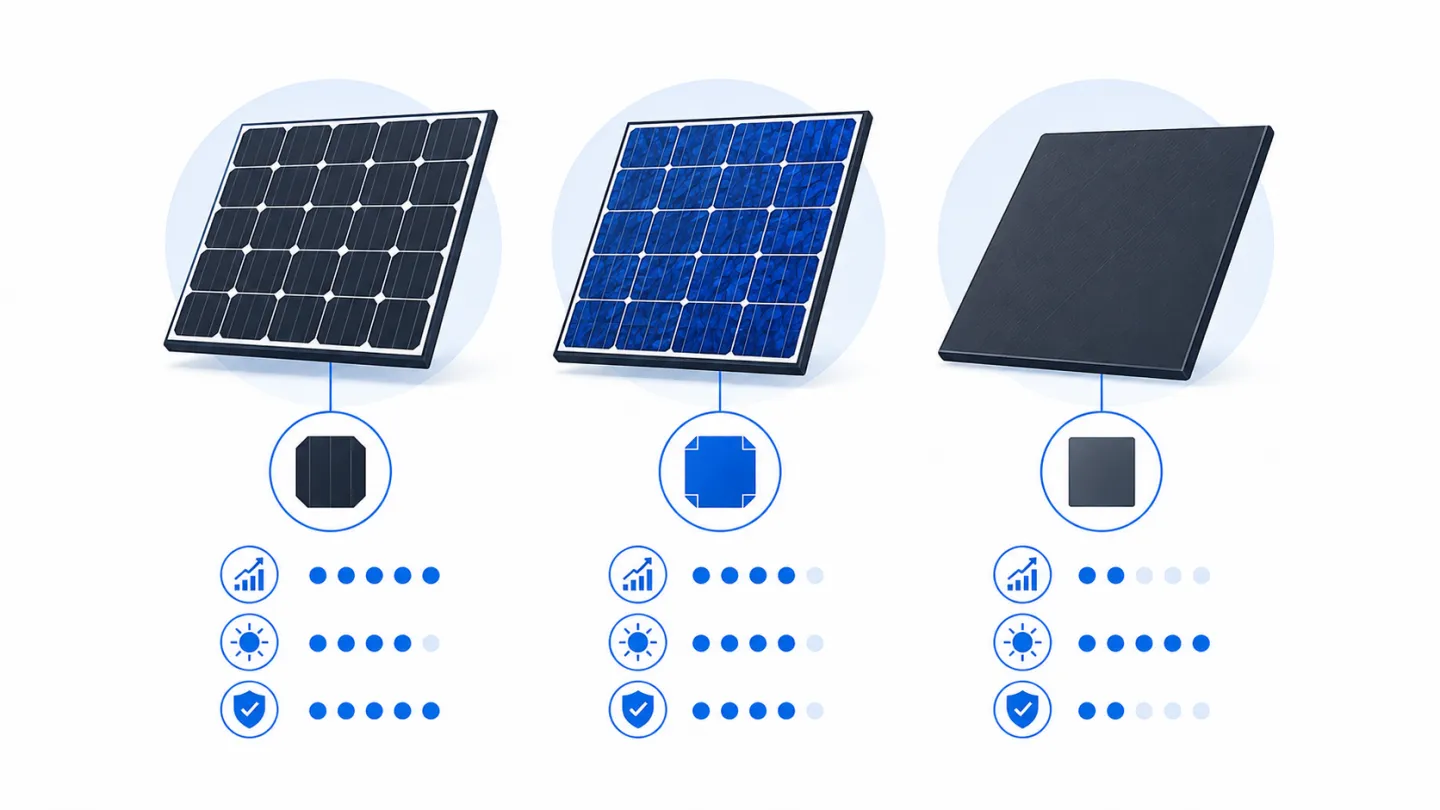
The primary source of generation; monocrystalline panels are the most common today due to their high efficiency.
2. Mounts and racking structure
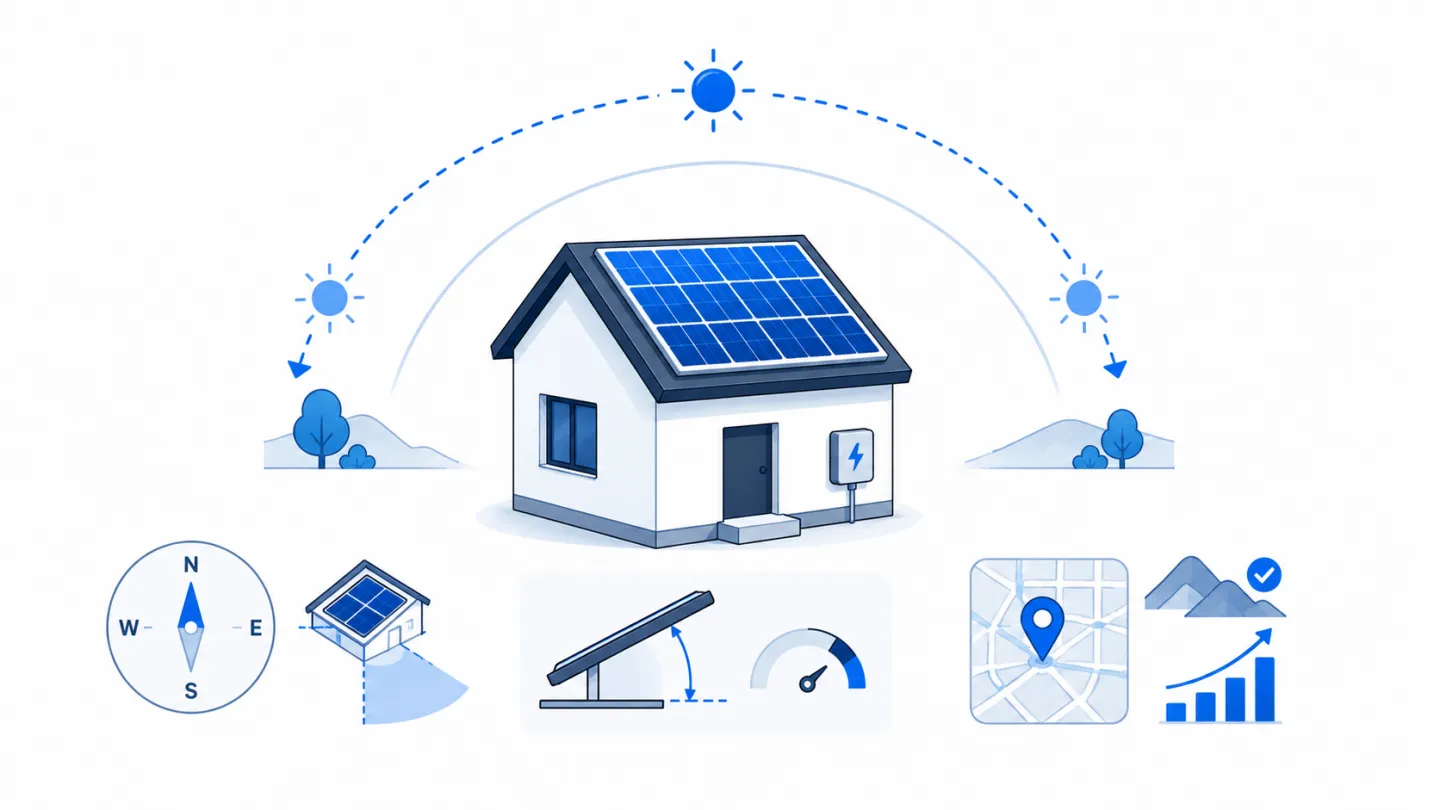
They ensure stability on the roof or ground and are adjusted to the optimal tilt and orientation.
3. Inverter
Converts and optimizes the energy.
4. Protective equipment and wiring
Cables, fuses, and the distribution board – critical for safety.
5. Monitoring app
Allows real-time tracking of energy production.
How does a residential solar power plant function during the day?
During the day, the PV plant generates energy, and the house consumes it according to its current needs. Three scenarios are possible:
1. Production = Consumption
The house is fully powered by solar energy.
2. Production > Consumption
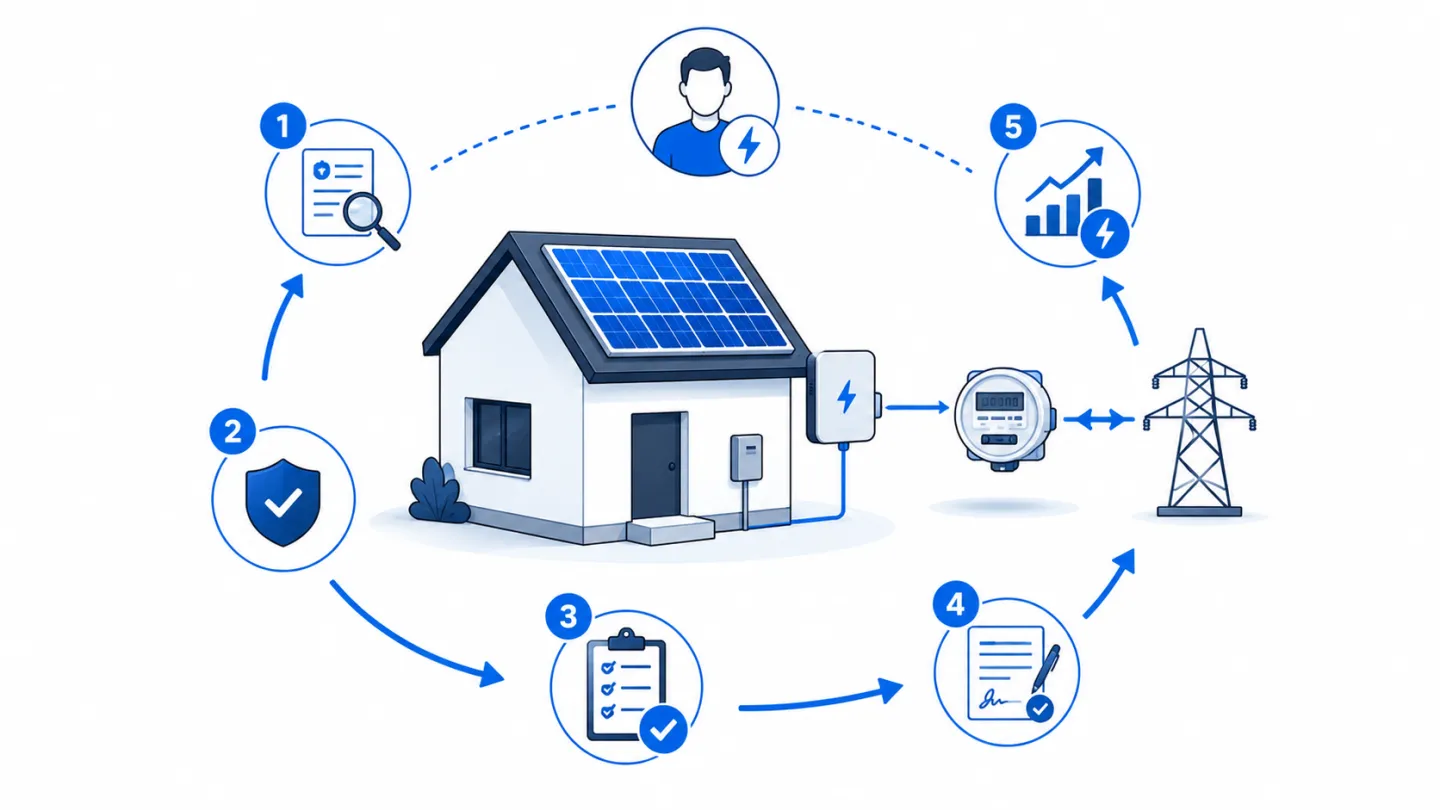
The excess energy is fed into the grid (as a prosumer) or stored in a battery if the power plant features a storage system.
3. Production < Consumption
The deficit is drawn and supplemented from the public grid.
Advantages of a solar power plant
A solar power plant brings numerous long-term benefits:
- significantly reduces monthly bills
- protects against rising energy prices
- provides energy from a sustainable source
- increases property value
- involves almost zero maintenance costs
- operates quietly and automatically
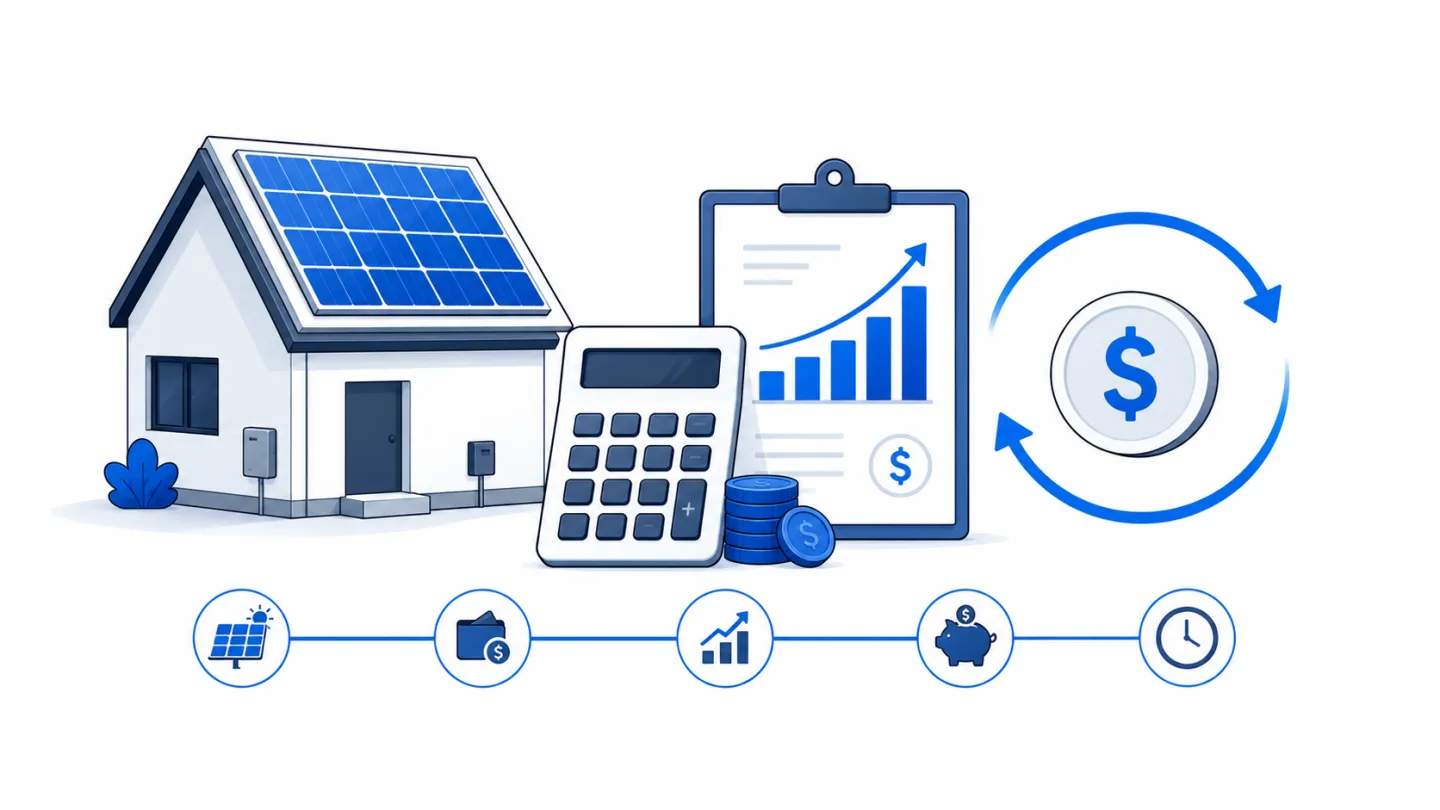
- Most households see a return on investment (ROI) within 5–8 years, while the panels themselves last 25–30 years.
Conclusion: Simple technology that delivers massive benefits
The operating principle of a solar power plant is actually very simple – sunlight is converted into electricity, which then powers your household. The system functions independently, automatically, and silently, delivering significant savings over the long run. For most homeowners, a solar power plant is becoming one of the smartest investments in their energy future.