

Every nuance matters for maximum yield
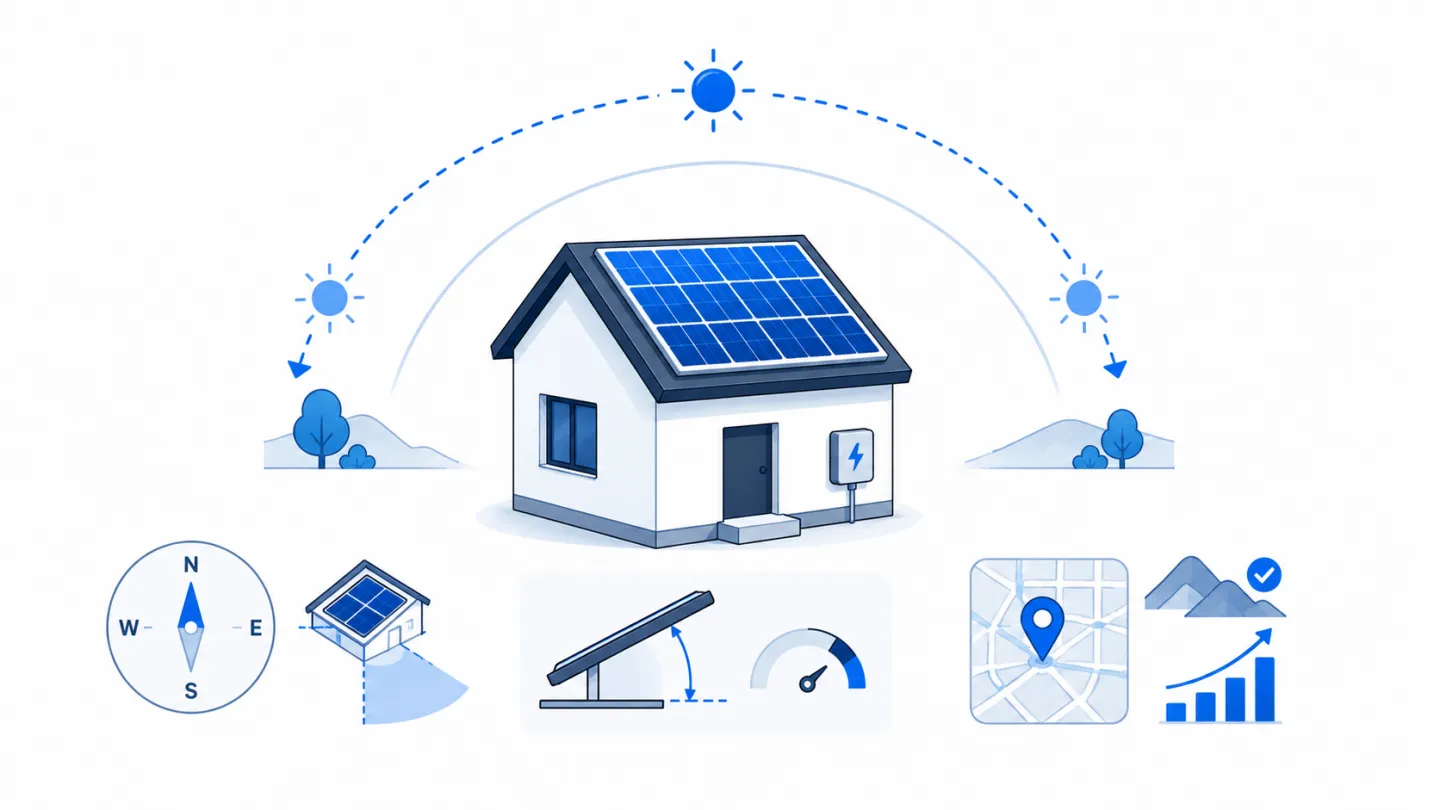
When talking about a solar power plant, many people pay the most attention to the price and choice of panels, but one of the most important factors that directly determines the total annual production is — the orientation and tilt of the panels.
The good news? Most roofs in Croatia are naturally highly suitable for high yields, even if they are not perfectly oriented towards the south.
This guide explains how to get the most out of your location, whether you are just planning a power plant or looking to optimize an existing one.
Ideal panel orientation in Croatia
Under theoretical conditions, solar power plants in Croatia generate the most energy when the panels are oriented towards the:
👉 South (180°)
This is the standard, most desirable orientation.
Advantages:
- highest total yield throughout the year
- optimal performance during the winter period
- even production throughout the day
If your roof faces south, you can count on maximum annual yield values — around 1,150–1,300 kWh per kW of installed capacity.
How much does deviating from the south reduce yield?
Many people fear that because their roof "is not perfect," the power plant will be unprofitable — but this is the most common misconception.
Realistic deviations:
| Orientation | Production Reduction |
|---|---|
| South (180°) | 0% |
| South-East or South-West (150°–210°) | 2–5% |
| East or West (90° or 270°) | 10–15% |
| North-East / North-West | 20–30% |
In practice, even an east-west orientation is often highly profitable, as it provides a wider production window and reduces peak pressure on the inverter.
When is East-West better than South?
In some cases, an east-west orientation delivers better results than a southern one — not in total energy volume, but in household utilization.
This orientation is ideal for homes that:
- consume more electricity in the morning and evening
- want even production throughout the day
- plan to charge an electric vehicle (EV) in the afternoon
- want to avoid excessive peak power output at noon
Due to the wider, "extended" shape of the production curve, east-west systems can incur lower losses from feeding power into the grid, which can be financially more favorable under the prosumer model.
What is the ideal panel tilt?
The tilt (pitch) of the panels affects the amount of solar energy that falls on them throughout the year.
The best tilt angle in Croatia:
👉 25° – 35° (depending on the location and roof structure)
Example:
- North Adriatic → 28°
- Continental region → 30–33°
- South Dalmatia → 20–25° (benefits summer production more)
What if the roof has a different tilt angle?
No problem.
- 15° tilt → 5–7% lower yield
- 45° tilt → 5–10% lower yield
- 10° tilt → higher need for cleaning (dust and snow)
- 50° tilt → better winter yield, weaker summer yield
Even roofs with a 10° or 45° tilt remain highly profitable.
The impact of shading – production's greatest enemy
Even minor sources of shading can significantly reduce production:
- chimneys
- skylights
- trees
- satellite dishes
- neighboring structures
What is the impact of shading?
- brief shading (1–2 hours daily) → 5–15% lower production
- long shading (several hours) → 20–40% lower production
- constant shading → the power plant is not viable
In such cases, the following are recommended:
- optimizers
- microinverters
- rearranging the panel layout
How to increase yield on a less-than-ideal location?
If the roof is not a "perfect south," here are ways to optimize:
✔️ increase the number of panels (if space allows)
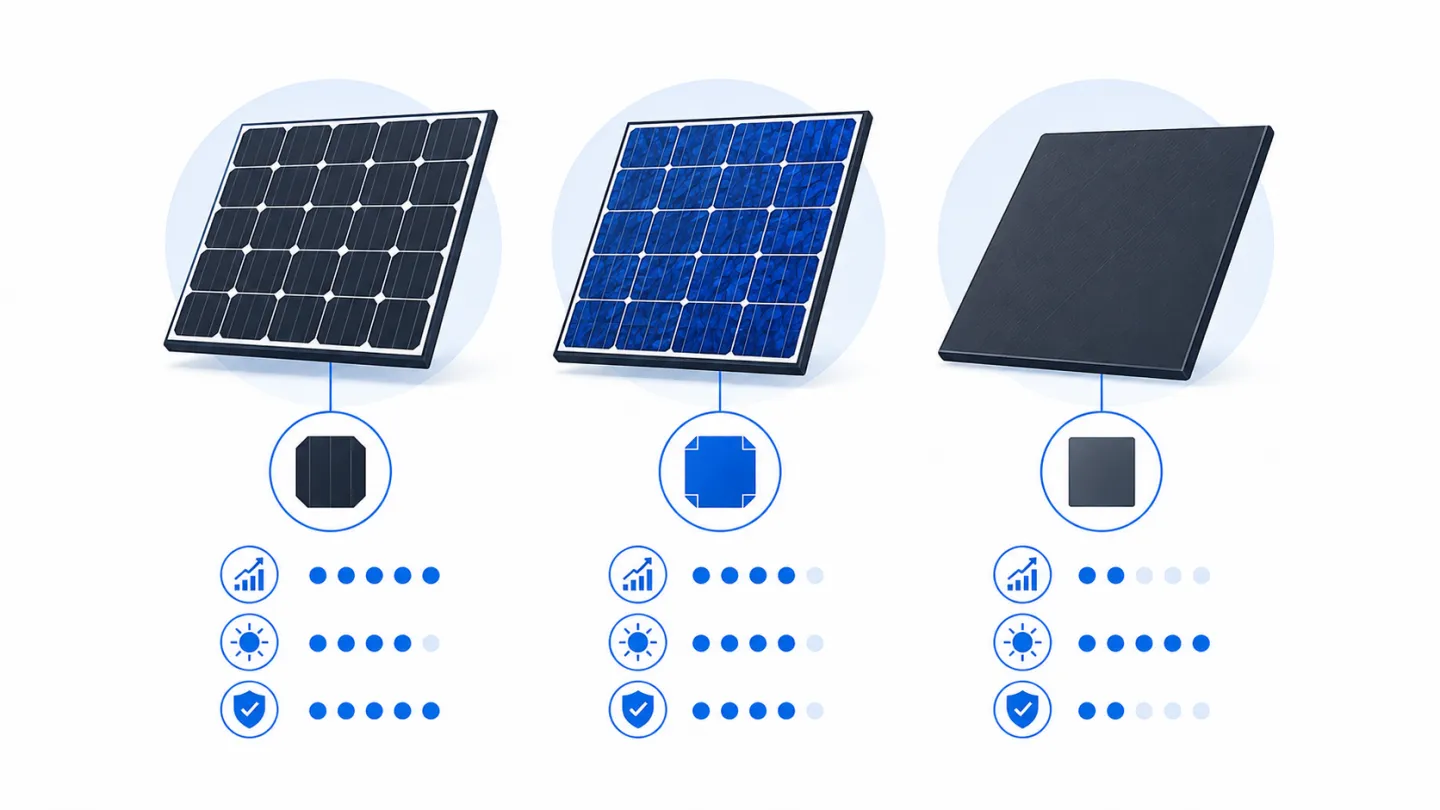
✔️ use higher-efficiency panels (monocrystalline 21–23%)
✔️ install optimizers on shaded modules
✔️ use microinverters for complex roof geometries
✔️ avoid excessive peak power mismatches relative to the inverter
The biggest mistake is giving up on a PV plant just because the roof isn't perfect. In 90% of cases, the power plant remains highly profitable.
Conclusion: The right positioning brings long-term benefits
The ideal orientation and tilt of the panels are key to maximizing the efficiency of a solar power plant, but realistically speaking — most Croatian roofs offer excellent conditions, and even with minimal deviations from the ideal direction, the yield remains at a very high level.
If properly designed, even an east-west power plant can be just as profitable as a southern one, providing more balanced daily production and higher self-consumption.
A solar power plant is not just technology — it is an investment in stability, energy independence, and long-term financial security.